
Air quality
Healthy air — crucial for well-being and performance
Air – mostly invisible, but essential: Air affects our well-being, performance, and health. Discover how it works – and how ionization ensures clean, healthy indoor air.

Definition of air
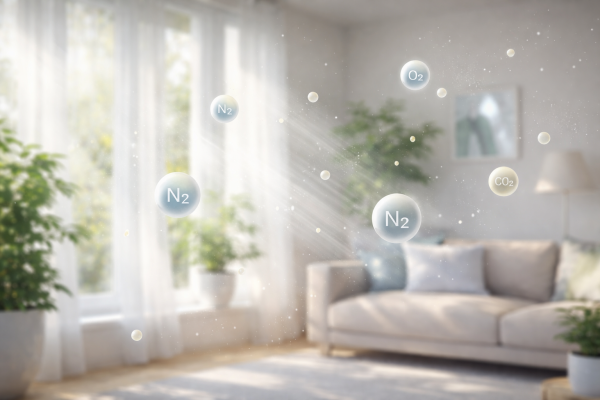
Air is a mixture of nitrogen, oxygen, and carbon dioxide gases – and contains fine particles such as dust, pollen, and aerosols. Indoors, there are also extremely fine foreign substances – from materials, processes, or living organisms, for example.
These components are usually invisible, but they noticeably change the composition of the air.

How we perceive air
We perceive air through smell, temperature, and movement – but we usually only notice its quality when it is less than fresh. Fresh, balanced air promotes well-being, concentration, and comfort.
Our perception does not respond to individual substances, but to the interaction of many factors: fine particles, chemical fragrances, and biological components in the air determine how pleasant the air is for us.
What ions are
Ions are electrically charged particles that occur naturally in the air – for example, through solar radiation, water movement, or electric fields. Their concentration indoors is usually significantly lower than outdoors.
Ions bind fine particles, neutralize odors, and reduce microorganisms in a sustainable manner. This natural air purification improves air quality and makes it noticeably fresher.
Electrical ionization allows ions to be generated in a targeted manner and their positive properties to be used for our purposes. This is not a chemical additive, but a purely physical process.

Ionization vs. ozone
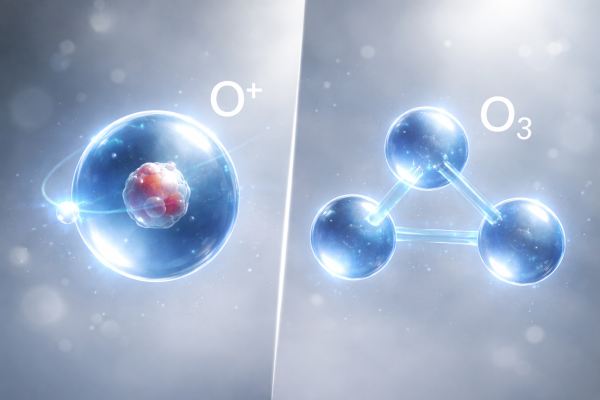
Ozone (O₃) is a highly reactive gas that can be used specifically for oxidation, but is not suitable for unprotected human exposure. Its effect is based on chemical reactions and is classified as a biocide.
Ionization (e.g., O⁺ and O⁻), on the other hand, has a physical effect. This produces electrically charged oxygen particles that are significantly lower in energy but still have positive oxidation properties.
Thanks to its low charge potential, ionization can even reduce the concentration of ozone in a room. It is therefore designed for continuous use in indoor spaces.
Safety and standards
Our ionization systems comply with the applicable safety and standard requirements for indoor use. They are used in a controlled manner and individually tailored to the respective application.
Very small amounts of ozone may occur as a by-product, but in correctly designed systems these are well below the relevant limit values and therefore pose no health risk.
The focus is on safe continuous operation that takes people, materials, and the environment equally into account. This allows you to improve air quality without compromising on safety or environmental compatibility.
As an active member of the Swiss Association for Air and Water Hygiene (SVLW), we underscore our commitment to safe and healthy indoor air.

Conclusion
Clean air is the basis for well-being, health, and performance. It is created through the interaction of physical, chemical, and biological factors. Ions can help bind particles, neutralize odors, and reduce microorganisms – discreetly, effectively, and safely, without any chemical additives.
Ionization offers a targeted way to support the natural balance of the air and improve the indoor climate in the long term.
Would you like to learn more about improving your indoor air quality or are you interested in a personalized consultation?
Let’s improve your air together – we will find the right solution for your needs.